Coloring Pages by Age: A Simple Guide for Parents and Teachers
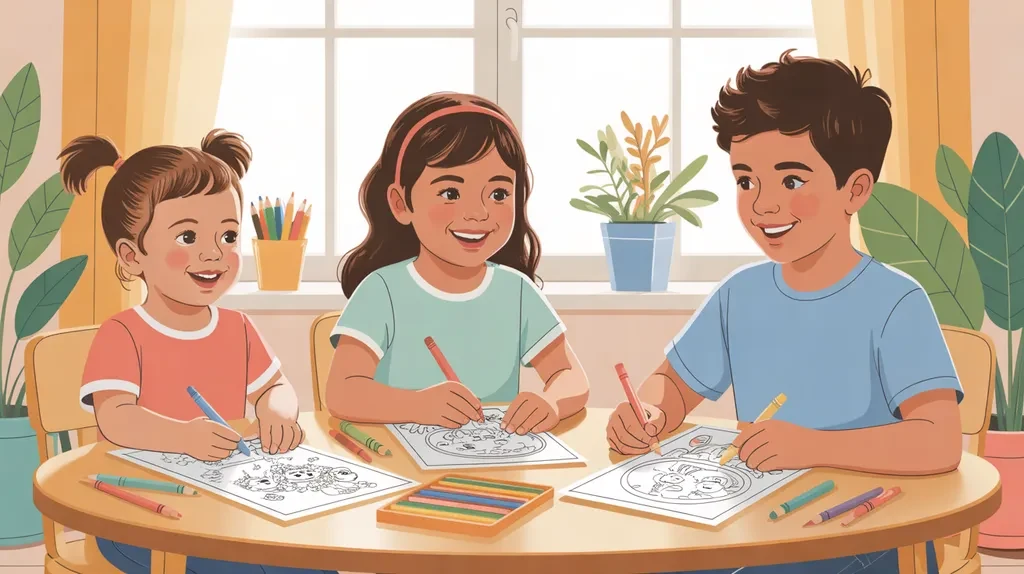
Choosing the right coloring page makes a big difference. A page that is too detailed frustrates a toddler, and a page that is too simple bores an older child in two minutes. This guide explains what usually works at each age, what to look for in a page, and which of our free printable collections fit best. Every page on CuteColorings downloads as a free PDF with no sign-up.
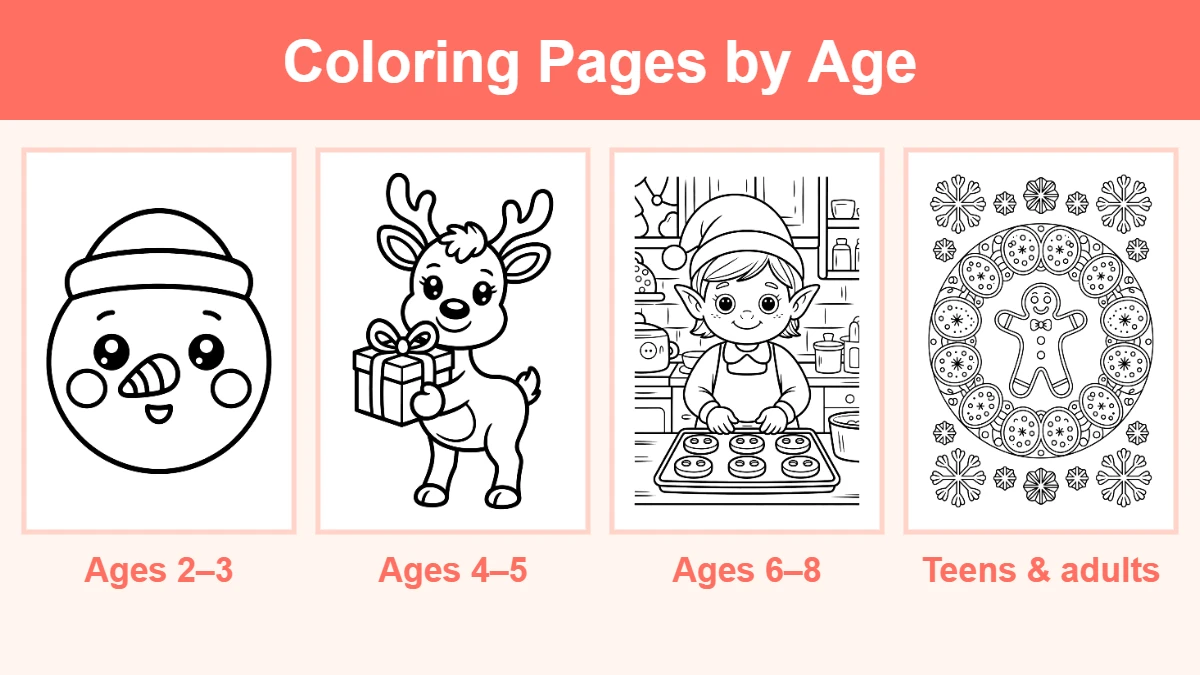
Quick answer: Ages 2–3 do best with one big shape and very thick lines. Ages 4–5 like one character with a few simple details. Ages 6–8 enjoy small scenes with a background. Ages 9–12 can handle detailed animals, patterns and busy scenes. Teens and adults usually prefer mandalas, zentangle and stained-glass style pages. Children develop at different speeds, so treat ages as a starting point, not a rule.
Coloring pages by age at a glance
| Age | What works best | Good first picks |
|---|---|---|
| 2–3 years | One big object, very thick outlines, large empty spaces, no background | Kawaii faces, simple animals, hearts, fruit and treats |
| 4–5 years | One or two characters, bold lines, a few medium details | Cute animals, unicorns, cars, snowmen, cupcakes |
| 6–8 years | Small scenes with a simple background and an action | Holiday scenes, sledding, baking, farm and ocean scenes |
| 9–12 years | More detail, realistic animals, patterns inside shapes | Realistic animals, villages, patterned designs |
| Teens and adults | Fine lines, many small areas, repeating patterns | Mandalas, zentangle, stained glass, full-page patterns |
Ages 2–3: big shapes and thick lines
Toddlers mostly scribble at first, often holding the crayon in a whole-hand grip. That is completely normal. At this age coloring is about exploring color and movement, not staying inside the lines. The best pages have a single large object, very thick outlines and a lot of white space, so any scribble still looks like a picture.
- Look for: one object per page, outlines that are thick and bold, no small parts and no background.
- Tools: chunky crayons or washable markers are easier to hold than thin pencils.
- Tip: name the colors and the object together (“a red heart!”). It turns coloring into early language practice.
🖍️ Try these: the easy designs at the top of our cupcake coloring pages, bunny coloring pages, heart coloring pages and the kawaii faces in our snowman coloring pages.
Ages 4–5: simple characters with a few details
Preschoolers start to use a more controlled grip and begin to aim for the inside of a shape. They often want to choose “the right color” for each part and enjoy recognizable characters: animals, vehicles, princesses and holiday figures. Pages with one main character, bold lines and a handful of medium-sized details (a scarf, a hat, a few buttons) give them something to work on without overwhelming them.
- Look for: one or two characters, clear separate areas, maybe a simple ground line.
- Avoid: tiny patterns and crowded backgrounds, which are hard to fill at this age.
- Tip: praise effort and color choices rather than neatness. Purple reindeer are allowed.
🖍️ Try these: unicorn coloring pages, dinosaur coloring pages, car coloring pages, kitten coloring pages and the easy section of our reindeer coloring pages.
Ages 6–8: small scenes and stories
Early school-age children usually have better control and more patience. They like pages that tell a little story: a snowman going sledding, an elf baking cookies, a family at the Thanksgiving table. A simple background (trees, a window, a snowy hill) adds interest, and many children this age start adding their own details, such as extra snowflakes, a sun or a name.
- Look for: a scene with an action, a background, and a mix of big and medium areas.
- Tools: colored pencils start to work well here, alongside markers for bold areas.
- Tip: ask “what is happening in this picture?” and let them write a sentence underneath. It is an easy literacy activity.
🖍️ Try these: the kids section of our Thanksgiving coloring pages, elf coloring pages, gingerbread coloring pages, mermaid coloring pages and monster truck coloring pages.
Ages 9–12: detail, realism and patterns
Older children often lose interest in pages that look “babyish”. They tend to prefer realistic animals, busier scenes and designs with patterns inside the shapes, where they can try shading, blending and their own color schemes. This is also a good age to introduce simple mandalas and pattern pages.
- Look for: realistic proportions, smaller areas, patterns, full scenes with several elements.
- Tools: a good set of colored pencils (24 or more colors) and fine-tip markers.
- Tip: challenge them to use only three or four colors, or to color the same page twice in different moods.
🖍️ Try these: horse coloring pages, wolf coloring pages, shark coloring pages, axolotl coloring pages and the realistic designs in our turkey coloring pages.
Teens and adults: mandalas, zentangle and stained glass
Many teens and adults color to relax. Pages with fine lines, many small areas and repeating patterns let you settle into a slow, focused rhythm. Mandalas, zentangle-style designs, stained-glass windows and full-page patterns are the most popular choices.
Our newer collections with 36 designs are split into easy, kids and detailed sections, so one page can serve the whole family. Scroll to the bottom of collections like snowman, Christmas stocking or cupcake coloring pages to find the mandala, zentangle and stained-glass designs. For more, see our adult coloring pages.
How to tell if a page is the right level
- Too hard: the child stops after a few minutes, colors over everything in one color, or says “I can’t”. Go one step simpler: bigger shapes, fewer parts.
- Too easy: the page is finished in a minute or two and they ask for another straight away. Offer a page with a background or more details.
- Just right: they stay with it, talk about it and are proud to show it. That is the level to stay at for a while.
Mixing levels is fine. Siblings of different ages can color pages from the same collection, one easy and one detailed, and still feel they are doing the same activity together.
Printing tips for every age
- Print at 100% scale (“actual size”) on A4 or US Letter paper. Our PDFs fit both.
- For markers and paint, thicker paper or light card stops colors bleeding through.
- For toddlers, print two copies of the same page. One can be scribbled on freely, the other kept for “careful” coloring later.
- In a classroom, print one simple and one detailed design from the same collection so every child can choose.
Want to know why coloring is good for children in the first place? Read our guide to the benefits of coloring books for kids.
Frequently asked questions
At what age can a child start coloring?
Many children enjoy scribbling with chunky crayons from around their second year, always with an adult nearby. Choose pages with one big shape and thick lines, and expect scribbles, not neat coloring.
When do kids start coloring inside the lines?
It varies a lot from child to child. Many begin aiming for the inside of shapes in the preschool years and become more accurate in the early school years. Bold, thick outlines make it easier at every stage.
Are detailed coloring pages bad for young children?
They are not harmful, but they can be frustrating. If a young child picks a detailed page, let them try. If they lose interest, offer a simpler design from the same theme.
What are the best coloring pages for adults?
Mandalas, zentangle designs, stained-glass style pages and full-page patterns are the most popular, because their many small areas make coloring slow and calming.
Are the coloring pages on CuteColorings free?
Yes. Every page downloads as a free PDF for personal, classroom and library use, with no sign-up.